


Psilocybin mushrooms are remarkably durable once properly dried, but even the most potent magic mushrooms don’t last forever. Customers often ask us, “do shrooms expire?” or worry when they see a bluish bruise on a stem. This guide clarifies what happens to mushrooms over time, how to spot bad mushrooms signs, and why investing in high‑quality products and proper storage makes all the difference. It’s the perfect follow‑up to our detailed storage guide where we covered best practices for freshness and potency.
Unlike fresh produce, properly dehydrated magic mushrooms don’t rot quickly because they contain very little water. When kept in an airtight container away from light, heat and humidity, dried mushrooms can maintain most of their potency for one to two years. Beyond that timeframe, they gradually lose strength. How fast potency declines depends on strain, moisture and exposure to air; dried mushrooms last months or years when stored well.
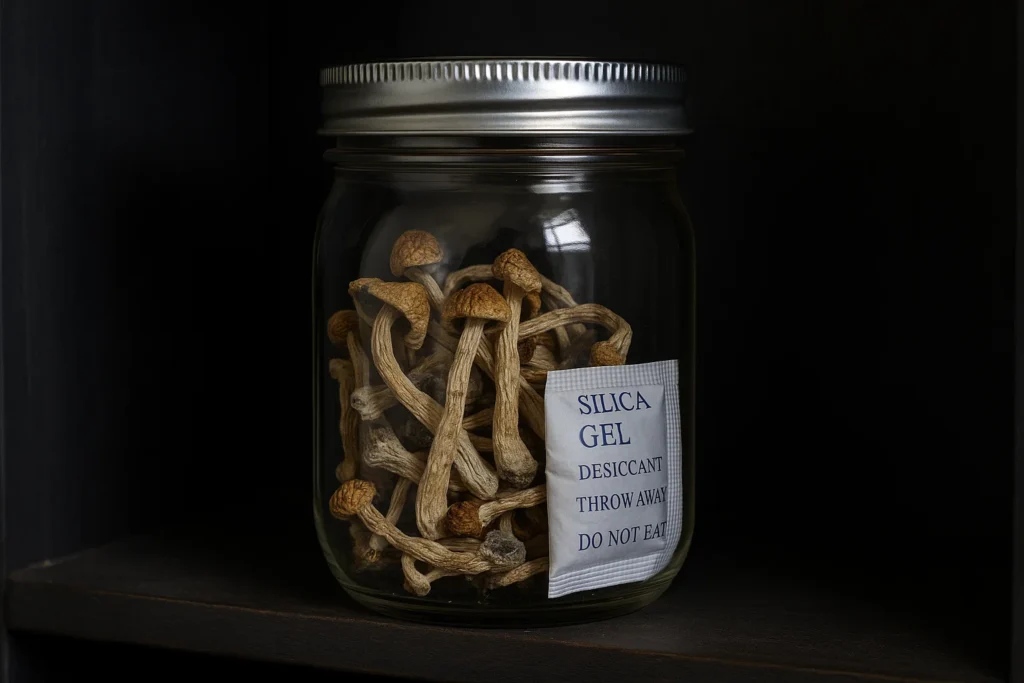
Although dried mushrooms rarely “spoil” like perishable foods, they can become unsafe or unpleasant if mishandled. Here are clear signs your shrooms are past their prime:

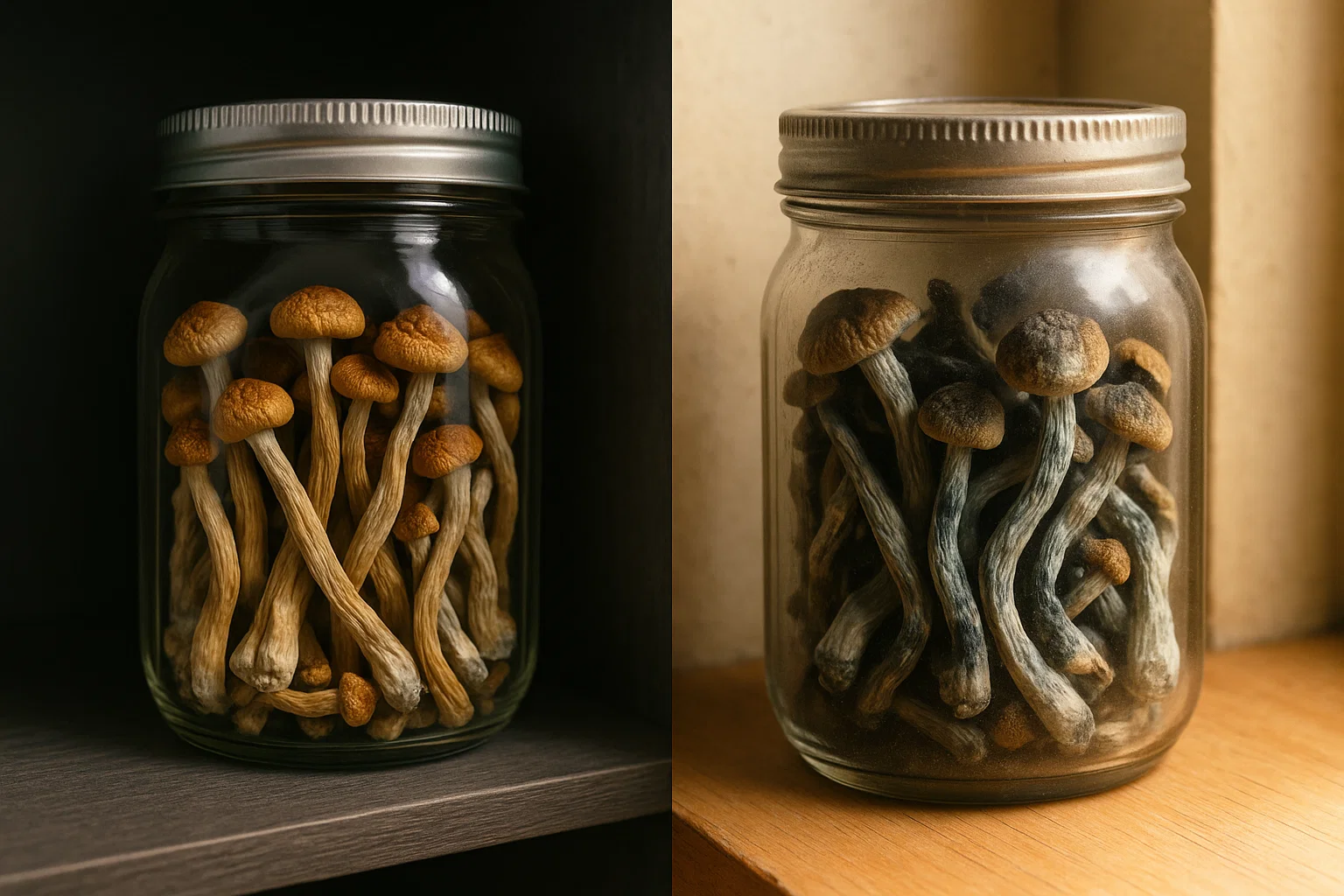
Fuzzy white, green or black patches indicate mold. Moldy mushrooms are not safe to consume—discard them immediately. Any moisture in storage can lead to mold growth. If you’re unsure whether a spot is bruising or mold, err on the side of caution. Bruises are typically uniform blue/green spots, whereas mold grows like fuzz or cotton.
Properly dried mushrooms feel dry and brittle. If your stash feels soft, spongy or soggy, moisture has entered the container. Dampness can lead to bacterial growth or insect infestation. Sometimes insects will lay eggs in moist substrates; discard any mushrooms showing signs of bugs.
Freshly dried mushrooms have a mild, earthy scent. A musty, sour or ammonia‑like smell means your mushrooms are compromised and should be thrown away. Good Moods’ products arrive with an earthy aroma, but if you detect a strong moldy odor, they may have absorbed moisture post‑purchase. Never take a chance on foul‑smelling mushrooms.
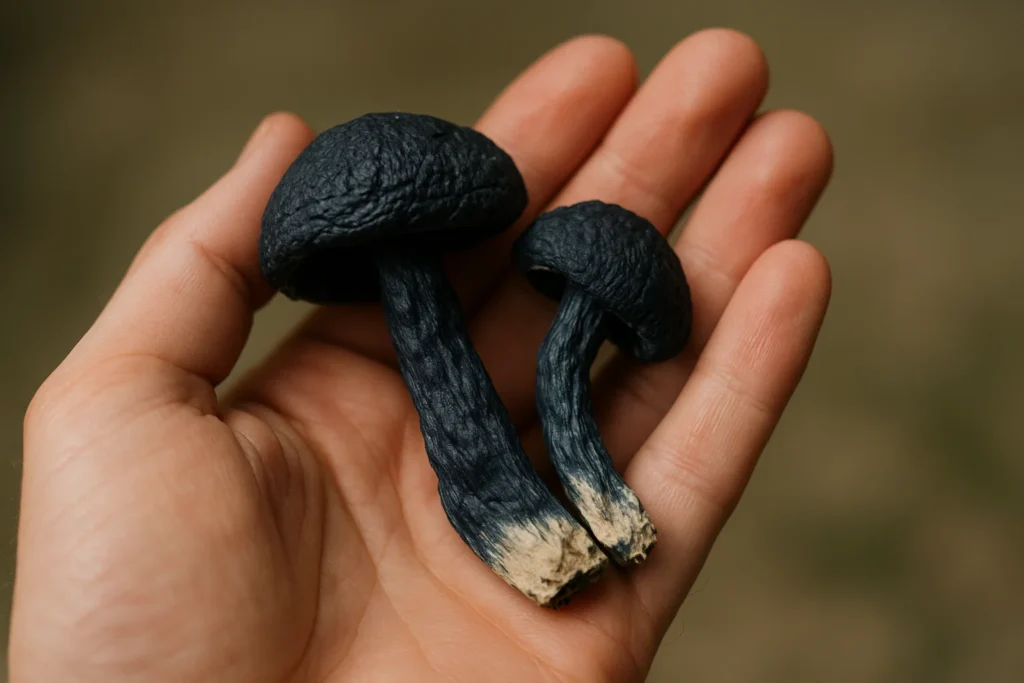
Many psilocybin species bruise blue when handled because the active compound psilocin oxidizes on contact. A bit of blue is normal, and research notes that even highly potent species can bruise deeply. However, excessive darkening across the entire mushroom may indicate rough handling, oxidation or contamination. Heavy bruising can degrade some psilocin, slightly reducing potency, so handle your mushrooms gently.
Even if no visible issues appear, extremely old mushrooms (two years or more) will be weaker. They won’t be “bad” in a toxic sense, but the effects will be diminished. When in doubt, test a small amount or invest in a fresh batch from a reputable source like Good Moods.
Modern psychedelic products include microdose capsules, gummies and chocolates. These forms have other ingredients that determine shelf life:
Capsules filled with powdered mushrooms or extracts typically last as long as the mushroom powder itself—about a year—provided they stay dry and cool. Gelatin capsules can absorb moisture, so store them in airtight jars with desiccants. Good Moods’ microdose capsules are hermetically sealed to maintain freshness. Always check the package for a best‑by date.
Our Good Mood Chews and similar gummies have a shelf life of 6–12 months. Gummies may harden over time or develop sugar crystals on the surface, but that’s mostly aesthetic. If a gummy shows mold (rare if stored properly) or smells off, toss it. Keep gummies in a cool, dry place; refrigeration is fine if they’re sealed to prevent moisture absorption. Heat will melt them, so don’t leave a bag of gummies in a hot car.
Magic mushroom chocolate bars contain cocoa butter and can last about 9–12 months. They might develop a white “bloom” (a harmless fat or sugar separation) on the surface if stored warm. This doesn’t mean they’re spoiled, but it can affect texture. Store chocolates in a cool, dark spot. Refrigeration or freezing works if you seal them tightly to prevent condensation and avoid temperature cycling. Our chocolate bars come pre‑wrapped for easy storage and portion control.
Psychedelic tinctures, ayahuasca drops, or DMT vapes require careful storage: keep them cool, dark, and upright. Alcohol‑based tinctures last longer than glycerin‑based formulas. Follow the manufacturer’s guidelines. Good Moods’ ayahuasca tincture is labelled with an expiry date; store it in a cupboard away from heat or sunlight.
Here’s a concise checklist for keeping your mushrooms and products fresh:
At Good Moods, we take shelf life seriously. Our dried mushrooms are thoroughly dehydrated and vacuum‑sealed to prevent moisture and oxygen exposure. We ship them in discreet, resealable pouches that you can reuse for storage. For large orders (like half‑pound or pound bags), we recommend transferring the contents into multiple airtight jars with desiccants—splitting your stash preserves potency and minimizes contact with air each time you open a jar.
All Good Moods edibles and microdose products include use‑by dates to help you gauge freshness. We want you to enjoy safe, potent experiences. If you discover an old stash that smells funky, has mold, or simply doesn’t hit the way it used to, we encourage you to discard it and treat yourself to a fresh batch from Good Moods. Your safety and satisfaction are worth more than squeezing the last spores out of a questionable bag.
By following these guidelines and purchasing from reliable suppliers like Good Moods, you can enjoy potent, safe experiences for months to come. Explore our range of dried mushrooms, microdose capsules, gummies, and chocolates, all thoughtfully prepared for longevity. Your journey should start with confidence that your mushrooms are fresh and your products are handled with care.
Q: Do magic mushrooms expire if stored correctly?
A: Properly dried and stored mushrooms don’t “expire” in the sense of becoming toxic, but they do lose potency over time. In a cool, dark, airtight environment, they stay effective for 1–2 years. Past that, they may be weaker.
Q: How can I tell if my mushrooms are bad?
A: Look for mold (fuzzy growth), sogginess, insect damage, or a foul odor. Uniform blue bruises are normal, but extensive black or green fuzz means discard. If in doubt, throw them out.
Q: Is it safe to freeze magic mushrooms?
A: Yes—freezing dried shrooms in airtight bags can extend shelf life indefinitely. However, ensure they’re fully dried before freezing to prevent ice crystals. Many users prefer room‑temperature storage with desiccants because it’s simpler and avoids freezer burn.
Q: Can microdose capsules, gummies and chocolates go bad?
A: Yes. Capsules last around a year if kept dry; gummies about 6–12 months; chocolates 9–12 months. Always check the best‑by date and store them in cool, dark, dry places. If you notice mold, off smells, or melted messes, discard the product.