Microdosing Psilocybin 101: Benefits, Risks, and How to Start
goodmoods23
Microdosing psilocybin mushrooms – taking tiny, sub-perceptual doses of psychedelic mushrooms – has surged in popularity recently. Advocates claim this practice can boost mood, creativity, and focus without the intense “trip” of a full dose. But what does microdosing really entail, and do the benefits live up to the hype? In this guide, we’ll cover the basics of microdosing psilocybin, the potential microdosing benefits and risks, and how to get started safely and effectively. We’ll also highlight some convenient microdosing products (like pre-measured capsules and gummies) from Good Moods that take the guesswork out of your regimen.
What Is Microdosing Psilocybin?
Microdosing means taking a very small fraction of a normal psychedelic dose on a regular schedule. For psilocybin mushrooms, a microdose is typically ~0.1–0.3 grams of dried mushroom—roughly one-tenth of a usual recreational amount (a common hallucinogenic “trip” dose is around 2–3 grams dried). At this sub-perceptual level, you experience no hallucinations or major impairment; the effects are subtle, if noticeable at all.
Enhanced cognitive performance – many users describe sharper focus, higher productivity, and more creative thinking.
Survey research confirms these are the most common reasons for microdosing. In fact, studies have found that many microdosers perceive mental health benefits – reporting lower depression, anxiety, and stress levels compared to non-microdosers.
That said, expectations likely play a role. If you believe a tiny dose will make you happier and more productive, you might feel some improvement whether or not the substance is biologically doing it. For example, a 2022 placebo-controlled trial found no measurable cognitive or creativity boost from microdosing psilocybin, but participants still felt happier and more creative on microdose days. This suggests some benefits could be partly placebo or subjective experience.
In short, the benefits of microdosing tend to be subtle and variable. Some people swear by microdosing as a mood and creativity enhancer, while others notice little change. Early scientific results are mixed – cautiously optimistic in areas like mood and mental health – but not conclusive. Your mileage may vary. If you decide to try microdosing, go in with an open mind and track how you feel, rather than expecting a life-changing transformation overnight.
Finding your flow: a subtle boost to creativity and focus.
Risks and Unknowns of Microdosing
Like any emerging practice, microdosing comes with some caveats:
Legal status & quality control: Psilocybin mushrooms are illegal in most places, meaning no regulation. Product potency can vary widely, and misidentifying a wild mushroom could be dangerous (some poisonous varieties look similar). Always obtain mushrooms or microdose products from a trusted, reputable source to avoid these risks.
Possible side effects: At microdose levels, serious side effects are uncommon. Most people tolerate low doses well, but some report minor issues like headaches, restlessness, or insomnia on dose days. These effects are typically mild and short-lived, if they occur at all.
Tolerance buildup: Psychedelics can quickly lead to tolerance. If you microdose too frequently (for example, daily without breaks), the positive effects may diminish. Stick to a dosing schedule with regular off-days to preserve effectiveness.
Not for everyone: Even tiny doses of psychedelics might be risky for anyone with a history of serious mental health conditions. Individuals predisposed to schizophrenia or psychosis should avoid psilocybin, as it could potentially trigger symptoms. If you have any underlying psychiatric or neurological conditions, consult a professional before microdosing.
Use common sense: Until you know how a microdose affects you, avoid driving or operating heavy machinery on dose days. And be precise with your dosing – measuring out such small quantities can be tricky, and accidentally taking too much could lead to an unwanted stronger experience (with anxiety or a racing heart).
How to Start Microdosing Psilocybin
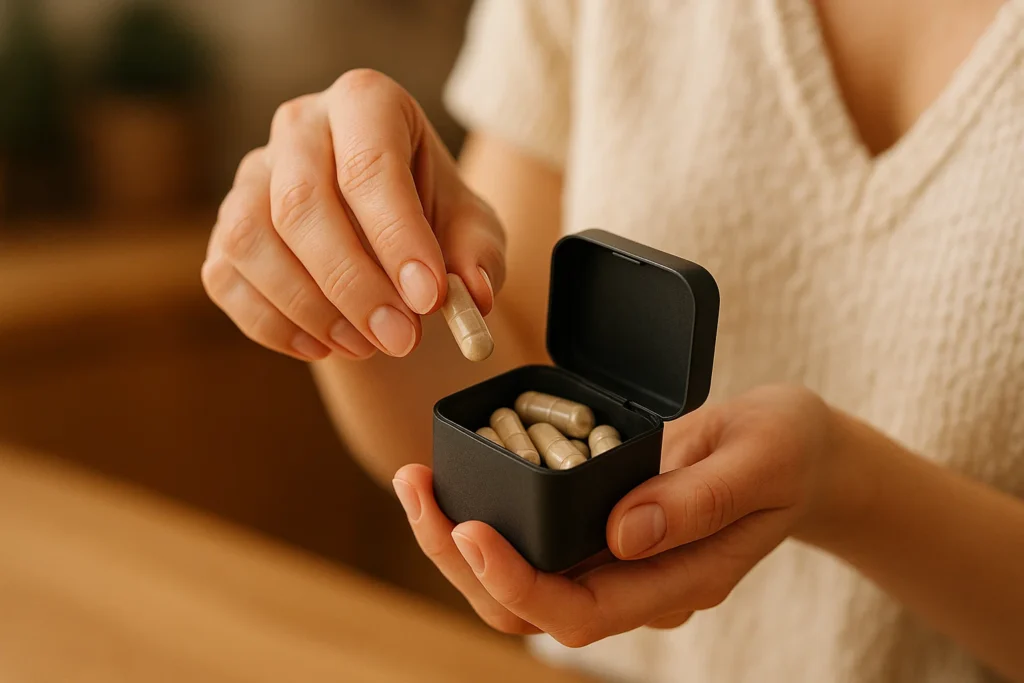
Precise and simple: the convenience of pre-measured capsules for your microdosing journey.
Set clear intentions. Before you begin, ask yourself what you hope to achieve. Are you looking for improved mood or reduced anxiety? Perhaps a creativity boost or better focus? Defining your goals will help you tailor the experience and later evaluate if it’s working.
Source your microdose reliably. Obtain your psilocybin from a trusted source and decide how you’ll measure it. If you have dried mushrooms, use a precise scale (to the milligram) to weigh out doses. For an easier start, you can opt for pre-measured products like Good Moods’ Daytryp Micro Flow capsules or the Magic Microdose Powder packets. These take out the guesswork and ensure you’re getting an accurate microdose every time.
Start low and go slow. On your first microdosing day, begin with a small dose – around 0.1 gram (100 mg) of dried mushroom is a common starting point. At such a dose, you might not noticeably “feel” anything, which is normal. Resist the temptation to take more on the same day. Try ~0.1 g for a few sessions on different days. If after a couple of weeks you feel it’s too subtle, you can gradually increase the dose (for example, to 0.2 g). Most people find their sweet spot in the 0.1–0.3 g range. Important: The goal is not to get high, but to find a dose so low that any effects are gentle and in the background.
Choose a dosing schedule. Consistency and moderation are key. You should not microdose every day, both to avoid tolerance and to gauge effects on non-dose days. A popular regimen is one day on, followed by two days off (for example, dose on Monday, then wait until Thursday for the next dose). Pick a schedule that fits your life and stick to it for several weeks. Also plan to take a longer break after about 4–6 weeks of continuous microdosing. This “reset” period (usually a couple of weeks off) helps prevent any tolerance buildup and lets you reflect on your progress.
Track your experience and adjust. Keep a journal or log to record your microdosing journey. Note the date, the dose, and how you feel on both dosing days and the days in between. Pay attention to changes in your mood, energy, anxiety levels, creativity, or other factors related to your goals. After a few weeks, review your notes for patterns. Do you see improvements that align with your microdose days? Has your overall well-being shifted? Use this feedback to adjust your approach if needed. For example, you might find that 0.15 g works better for you than 0.1 g, or that two days between doses isn’t quite enough recovery time. On the other hand, you might conclude that microdosing isn’t noticeably benefiting you – and that’s okay too.
Making Microdosing Easier with Good Moods Products
Brighter days ahead: enjoying genuine connection and a lighter mood.
Measuring tiny doses and sourcing safe mushrooms can be tricky for beginners. That’s where Good Moods comes in – they offer a range of ready-to-use microdosing products that simplify the process. If you’re new to microdosing, you’ll appreciate the convenience of pre-measured doses. For example, Daytryp “Micro Flow” capsules contain a precise amount of psilocybin in each pill, and the Magic Microdose Powder packets provide an easy way to mix a microdose into your beverage. Good Moods also has microdose edibles like Aloha gummies and milk chocolate minis, which deliver the same controlled dose in a tasty treat form.
Using these products takes the guesswork and manual prep out of microdosing. You don’t need to fiddle with scales or worry about uneven potency – each serving is standardized. Good Moods even offers bundle options so you can try multiple varieties (check out the Ultimate Gummy Bundle or build your own custom pack with Build Your Own Bundle). By trusting a reliable source, you can focus on the experience and benefits of microdosing, rather than the logistics. In short, Good Moods provides a safe, accurate, and convenient start for your microdosing journey.Microdosing psilocybin offers a novel way to explore the benefits of psychedelic mushrooms in a gentle manner. It has helped many people elevate their mood, spark creativity, and reduce anxiety – but it’s not a one-size-fits-all solution, and results can differ greatly. The science is still catching up, so tread thoughtfully. If you choose to try microdosing mushrooms, do so safely and intentionally: follow best practices, listen to your body, and abide by the law. With a careful approach (and a reliable source for your doses), microdosing can become a valuable tool for personal growth and well-being. Stay safe, stay curious, and happy microdosing!
Facebook
Twitter
LinkedIn
You must be 21 years of age or older to make a purchase from this website. All Good Moods plant medicine products are for healing purposes only. Customers agree that any medicines offered on this website are to be used as sacrament to practice your religious beliefs as you wish.