

Magic truffles and magic mushrooms are both sources of the psychedelic compound psilocybin, but they aren’t exactly the same thing. In this article, we’ll explain what magic truffles are (versus actual mushrooms), compare their effects and potency, and discuss why truffles are legal in some places where mushrooms aren’t. We’ll also highlight how you might use truffles similarly to shrooms, including microdosing, and touch on a few common truffle varieties like Psilocybe Mexicana and Psilocybe Atlantis.
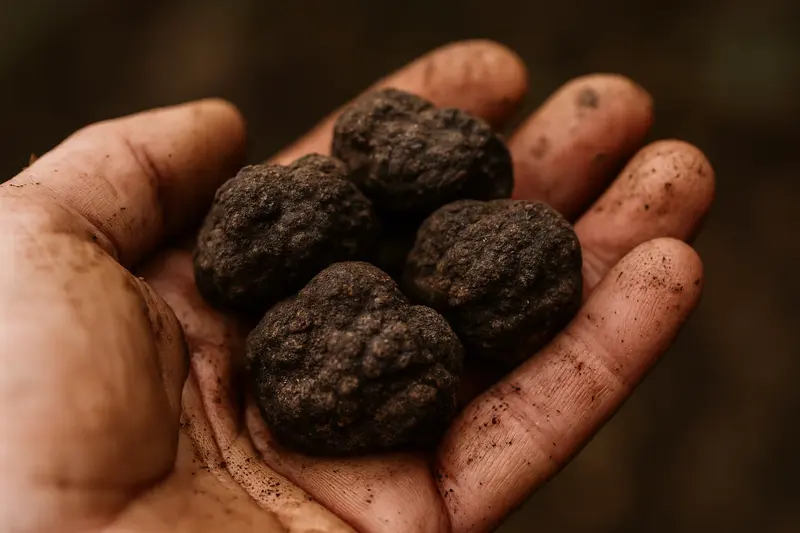
Magic truffles are not truffles in the culinary sense at all – they’re actually hardened masses of fungal mycelium called sclerotia, produced by certain psilocybin mushroom species underground. In other words, they’re part of the same organism as magic mushrooms but represent a different form: instead of the familiar above-ground mushroom cap and stem, the fungus can store nutrients in these pebble-like masses beneath the soil as a survival strategy. These sclerotia (commonly dubbed “magic truffles” or sometimes “Philosopher’s Stones”) contain the same hallucinogenic ingredients as magic mushrooms – primarily psilocybin (which the body converts to psilocin). Because they hold the same active compounds, truffles induce psychedelic effects just like mushrooms do.
Not all psilocybin mushroom species form truffles; only a handful are known for it. Examples include Psilocybe tampanensis (the original “Philosopher’s Stone” truffle), Psilocybe Mexicana, Psilocybe Atlantis, Psilocybe galindoi, and a few others. These species can produce sclerotia under the right conditions. Magic truffles are typically cultivated in controlled environments (especially in the Netherlands) by encouraging the fungus to form sclerotia. They are often sold fresh (damp) in vacuum-sealed packs, since drying them makes them very hard. Visually, magic truffles look like small, irregular, brownish nuggets – a far cry from the classic mushroom appearance. Their texture and taste are rather earthy and nutty (some say “walnut-like”), and many find them quite bitter. Because of this, people often consume truffles by grinding them into a tea or mixing with food to mask the flavor (this can also help ease any potential stomach discomfort from eating them raw).
One of the key reasons magic truffles attract interest is their legal status in certain places – more on that later. In short, after the Netherlands banned sale of magic mushroom fruits (caps/stems) in 2008, these underground sclerotia were not covered by the ban (authorities initially viewed truffles as a milder product). Thus, truffles became a popular legal alternative sold in Dutch “smart shops”. They offer an avenue to experience psilocybin in jurisdictions where actual mushrooms are prohibited. It’s important to note that outside of such loopholes, truffles do still contain psilocybin – a controlled substance – so in most countries they are treated as illegal just like mushrooms. Always check local laws before considering magic truffles or mushrooms.
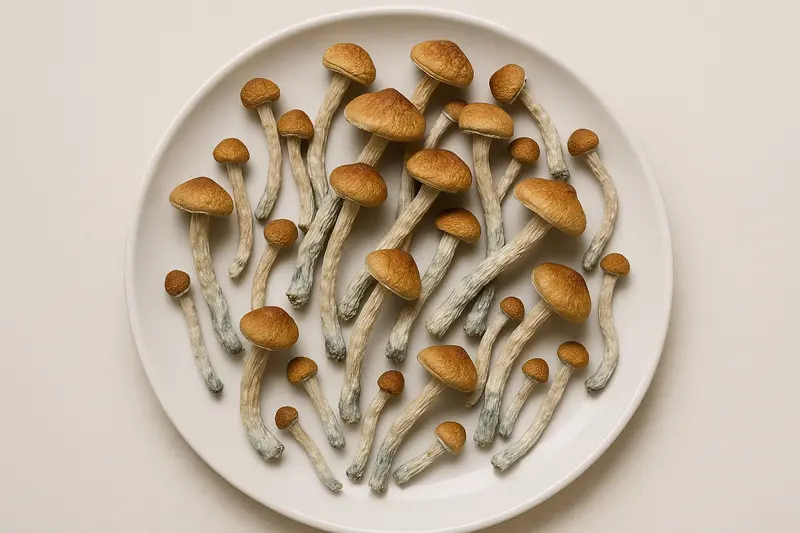
Magic mushrooms refer to the fruiting bodies of various fungi that produce psilocybin. When someone says they took “shrooms,” they mean the dried or fresh mushrooms themselves – typically cap-and-stem mushrooms from the genus Psilocybe (like the well-known Psilocybe cubensis, P. semilanceata (liberty cap), P. cyanescens, etc.). These mushrooms pop above ground and carry spores for reproduction. They’re harvested, usually dried (which preserves them), and consumed for their psychedelic effects.
Like truffles, magic mushrooms owe their effects to psilocybin and psilocin. In fact, chemically, there is no difference – psilocybin from a mushroom or from a truffle is the same molecule that binds to serotonin receptors and alters perception. Many psilocybin mushrooms also contain some direct psilocin (the active form), though psilocin is less stable and often breaks down when the mushrooms are stored or dried. In practical terms, though, when you ingest mushrooms, your body will metabolize the psilocybin into psilocin either way, producing the characteristic hallucinogenic journey.
Psilocybin mushrooms vary widely in potency across species and even strains. For example, Psilocybe cubensis (the most common cultivated species) generally contains around 0.5%–1.5% psilocybin by dry weight (with a notable portion of psilocin as well). Some specialty strains of P. cubensis – such as the famous Penis Envy – are known to be exceptionally potent, packing much more psilocybin than “standard” cubensis strains. (For instance, the Penis Envy strain has a reputation for double the strength of a typical strain like Golden Teacher.) Good Moods specializes in these fruiting body mushrooms for maximum potency and variety – for example, our selection includes highly regarded strains like Penis Envy (Penis Envy Mushrooms), Albino APE, and more, available in dried form.
Beyond P. cubensis, there are wild species far more potent – Psilocybe azurescens and P. semilanceata are among the strongest naturally occurring shrooms. By contrast, some species (or cultivated strains) are milder. Users often learn that 5 grams of one batch of mushrooms could feel as strong as 10 grams of another – it’s not an exact science without lab testing. Good cultivation and proper dosage measurements are key for mushrooms to ensure a consistent experience.
In terms of appearance, magic mushrooms look like, well, little mushrooms – they often have brown or golden caps and slender stems that bruise blue when handled (a sign of psilocin oxidation). When dried, they shrink and take on a shriveled, bluish-gray look. They can be eaten dry (often in capsules or straight chewing), brewed into tea, or even made into chocolates and other edibles. Good Moods offers some of these prepared forms—like our Mantra Euphoria Gummies and Mantra Euphoria Chocolates—which many find far more palatable than chewing on dried fungi. These infused edibles can be a gentler way to consume psilocybin for those averse to the taste or looking to reduce stomach load.

One of the biggest practical differences between magic truffles and magic mushrooms is potency by weight. Because truffles are a storage form of the fungus, not the actual fruiting body, they tend to have a lower concentration of psilocybin than the mushrooms do. Psilocybin mushrooms (dried) typically contain on the order of 0.5% to 1.5% psilocybin by weight, whereas psilocybin truffles usually contain around 0.2% to 0.7% by dry weight. In other words, gram for gram (dry), mushrooms are generally stronger. This makes sense, because the mushroom is the spore-spreading organ and often packs more of the active chemicals, whereas the sclerotium is more of a dormant nutrient stash.
Put simply, if you eat 5 grams of dried P. cubensis mushrooms, that could be a significant psychedelic dose (perhaps 0.025–0.05 g of psilocybin content on average). To get an equivalent psilocybin dose from truffles, you might need on the order of 15–20 grams of fresh truffles (since truffles are usually sold fresh with high water content, roughly 70-80% water). A common guideline in Amsterdam smartshops is that ~15 grams of fresh truffles is a strong trip, roughly analogous to a 3.5 gram “eighth” of dried shrooms. For a lighter experience, 5–7 g of fresh truffles might correspond to ~1–2 g dried mushrooms. Of course, individual potency varies.
Why do truffles seem weaker? Part of it is water content – fresh truffles have less water than fresh mushrooms, but they are still squishy (unlike cracker-dry shrooms), so dosage is often discussed in fresh weight for truffles vs. dry weight for shrooms. Chemically, both contain psilocybin (and in fresh specimens, psilocin). Interestingly, lab analyses have shown that psilocin is typically absent in stored truffles (it breaks down), whereas mushrooms can retain some if they’re dried carefully. Psilocybin itself is quite stable. Thus, a dried mushroom and a vacuum-sealed truffle might both only deliver psilocybin to your system in the end. The total psychoactive content is just usually less in the truffle by mass.
It’s worth noting that potency varies by species and even by cultivation batch for truffles, just as it does for different mushroom strains. In one analytical study, samples of psilocybin truffles (sclerotia from P. Mexicana, P. Atlantis, and P. tampanensis) showed psilocybin levels ranging from about 59 mg to 168 mg per 100 g of fresh truffle. That’s almost a three-fold difference in strength! This implies that certain truffle varieties can be significantly stronger than others. For example, the Atlantis truffle is generally considered on the high end of potency (users often rate it as a “strong” truffle), whereas the Mexicana truffle is known to be one of the mildest. We’ll compare those two specifically in a moment. The key takeaway is that “milder” does not mean “inactive.” Magic truffles can absolutely be powerfully psychedelic – you just may need a higher gram dose compared to dried mushrooms. Always dose carefully and start low if you’re unsure of a product’s strength.
For those who prefer a milder, controlled experience, one logical approach is microdosing. This has become popular with both mushrooms and truffles. In fact, Dutch vendors even sell microdose packs of truffles (small sub-perceptual doses pre-measured). Similarly, Good Moods offers precision microdose products using psilocybin mushrooms—for example, our Magic Microdose Electrolyte Powder Packets (each containing a precise 10 mg of psilocybin from mushrooms) or capsule packs like the Daytryp Micro Flow Daily Mushroom Supplement and Stamets Stack Dose Capsules, both formulated with exotic strains in micro amounts. These let you tap into the subtle, mood-enhancing effects akin to a very low truffle dose—but with pharmaceutical-like accuracy and consistency. Many people find that a microdose of a potent mushroom strain can resemble the gentle lift of a small truffle dose – improved mood, creativity, and focus, with minimal to no perceptual distortion. (As always, microdosing should be done responsibly and within legal bounds.)

From a pharmacological perspective, magic truffles and magic mushrooms produce the same kind of psychedelic effects. Psilocybin is psilocybin – once ingested, it’s converted to psilocin which then causes the cascade of altered sensory perception, visual hallucinations, euphoria, introspective thoughts, time dilation, etc., that characterize a “psychedelic trip.” If you take an equivalent dose of psilocybin via truffles or via mushrooms, the experience will be essentially indistinguishable. In fact, many veteran psychonauts report that a 15g dose of strong truffles can be just as profound as a hefty mushroom trip, with the same stages (onset of energy, fits of giggles, then waves of visuals and deep mind effects, followed by a gentle comedown). Both last on the order of 4–6 hours active, with afterglow effects potentially lingering into the next day.
So why do some people swear there’s a difference? The consensus in the community is that any differences are mostly due to set, setting, and expectation, as well as dosage differences. Magic truffles gained a bit of a reputation for being “milder” or more beginner-friendly, but this is largely because they were sold in pre-weighed moderate doses and often consumed in social or guided settings. The truth is, a truffle trip can be every bit as intense as a mushroom trip if you take enough psilocybin from them. As one source put it, truffles are not a “weaker version” of shrooms – they’re just a different form of the same fungi, legal in certain markets. Your brain does not know whether the psilocybin molecule it’s receiving came from a cap or a lump of sclerotia.
In summary, any differences in the qualitative effects of truffles vs mushrooms are subtle. Both will lead you through similar psychedelic territories if the dose is matched. Truffles might come on a tad slower or gentler (some report the peak of truffles is a bit shorter or “earthier”, but such reports are hard to measure scientifically). Mushrooms might feel slightly “sharper” in effect to some seasoned users – perhaps because of minor differences in alkaloid profiles (trace amounts of other compounds). However, these distinctions are anecdotal. The main practical differences lie in legality, dosing, and form, not the core psychedelic experience.
Legality is a big dividing line between magic truffles and magic mushrooms in certain locales. As alluded to earlier, psilocybin mushrooms are outlawed in many countries, classified as Schedule I / Class A substances (or local equivalent) due to psilocybin. This typically includes all parts of the mushroom – so stems, caps, spores (in some jurisdictions), whether fresh or dried, are illegal to sell and possess. Psilocybin truffles, however, slipped through the cracks in places like the Netherlands. In 2008, the Dutch government banned almost all psilocybin-containing mushrooms after some media-fueled incidents, but the law did not name “sclerotia” (truffles) specifically. The rationale at the time was that truffles were underground and thought to be less potent and less commonly used. Thus, a loophole emerged: smartshops could no longer stock magic mushroom fruiting bodies, but they could legally sell the truffle forms. To this day, magic truffles are openly sold in the Netherlands (and online from there to other European countries where legal grey areas allow it) as the only legal way to buy psilocybin. As Drug Science UK notes, “although truffles are legal, psilocybe cubensis mushrooms are currently illegal” in the Netherlands. Truffles occupy this grey zone – they are technically not the prohibited part of the fungus according to Dutch law, even though they contain the same drug.
Outside the Netherlands (and a few other countries with quirky laws), truffles are usually treated just like mushrooms. In most of the world, any material containing psilocin/psilocybin is illegal. For instance, in the United States, psilocybin is a Schedule I substance federally, and no distinction is made for mushrooms vs truffles – both are equally illicit to buy or possess (except in some local jurisdictions that have decriminalized personal use of “entheogenic plants and fungi”). So, it’s crucial not to assume truffles are a legal workaround unless you are explicitly in a place where they’re permitted. Always research your local regulations.
From a practical standpoint, the fact that truffles are usually sold fresh means they have a shorter shelf life. If you buy magic truffles (say, 15g in a vacuum pack), you need to refrigerate them and use them typically within a few weeks before they might degrade or mold. Mushrooms, on the other hand, are often dried and can last for months or years in storage (potency will slowly reduce over long periods, but properly dried shrooms are quite stable when kept cool and dark). This means truffles are often consumed soon after purchase, whereas dried mushrooms can be stockpiled. Good Moods, specializing in dried mushroom products, ensures our mushrooms are dehydrated to a perfect state to maximize shelf life and consistency – a consideration for those who prefer to buy in quantity or who microdose over time.
Another difference: availability and sources. Magic mushrooms are commonly grown at home by hobbyists (spore kits, home cultivation are popular and relatively easy for species like P. cubensis). Magic truffles can also be cultivated at home, but it requires a bit more patience – one must incubate the mycelium and then wait for sclerotia to form, which can take longer than growing mushrooms. Some enthusiasts do grow truffles (especially Psilocybe galindoi AKA ATL#7, which forms nice truffles), but it’s less widespread than mushroom cultivation. Therefore, if you have no access to a smartshop, you’re more likely to come across mushrooms (or mushroom grow kits) than truffle products.
Legally-sanctioned research has almost exclusively used psilocybin from mushrooms or synthetic psilocybin, not truffles. So all those promising studies about psilocybin (for depression, PTSD, etc.) don’t really distinguish the source – but they typically involved measured doses based on mushroom-derived psilocybin. In a regulated future, one could imagine standardized truffle preparations, but for now, the medical realm is focused on purified psilocybin or known mushroom strains. Good Moods’ stance is to stay updated on research and ensure any product – truffle or mushroom – is used safely and in an informed way by customers.
In summary, magic truffles vs magic mushrooms differ in how the law may treat them (with truffles being a legal grey area in a few places like NL), and in some handling aspects (fresh vs dried, etc.), but not in their fundamental nature – both are vehicles for psilocybin. Good Moods, while specializing in mushroom products (which are more potent and versatile in forms like dried, capsules, edibles), always stays knowledgeable about all things psilocybin, including truffles, so we can guide readers and customers in making safe, educated choices.
If you’re considering magic truffles, you’ll encounter different varieties often named after the Psilocybe species or a fanciful brand name. Just as mushrooms have strains like B+ or Golden Teacher, truffles have their own famous types. Two of the most talked-about are Psilocybe Mexicana and Psilocybe Atlantis, so let’s compare those as examples of “mild vs strong” truffles.
As the name suggests, this species hails from Mexico originally. P. Mexicana was actually the species from which Albert Hofmann first isolated psilocybin in 1950s, and it can produce both mushrooms and sclerotia. The truffles sold as “Mexicana” (sometimes nicknamed Pajaritos or simply Mexicana A) are known to be on the mild side. They typically have a lower psilocybin concentration compared to other truffles – in practice, a full 15g dose of Mexicana truffles might provide a nice entry-level trip: euphoric, creative, and lightly hallucinogenic rather than intensely mind-bending. Many beginners choose Mexicana for their first truffle experience. The trip is often described as happy, giggly, and insightful but not overwhelming. For instance, a user might experience brightened colors, fits of laughter, and interesting thoughts, but perhaps fewer of the deeply introspective or challenging moments that stronger truffles or higher doses can elicit. Because of this approachable nature, P. Mexicana is dubbed the “philosopher’s starter kit” – perfect for someone who has never tried psychedelics before. It’s still important to respect the substance: even Mexicana truffles can produce a several-hour hallucination and emotional journey, especially at the higher end of the dose range. But if we compare, say, 10 g of Mexicana truffles to 10 g of a stronger variety, the Mexicana will likely produce gentler effects. This is supported by analysis; P. Mexicana sclerotia in one study showed some of the lower psilocybin levels among truffle species (around 0.06% of fresh weight in one sample, for example).
P. Atlantis was discovered in Georgia (USA) and is a relative of P. Mexicana (sometimes considered in the galindoi/ATL group). Its truffles, often marketed simply as “Atlantis,” have a reputation for being much stronger. Many smartshops rate Atlantis truffles as 4 or 4.5 out of 5 on strength. An 11 or 15 gram dose of Atlantis can induce very vivid visuals and a deeply immersive psychedelic headspace. Users frequently report rich closed-eye visuals, a sense of wonder, and sometimes profound philosophical or spiritual insights from Atlantis truffles. In other words, Atlantis might “take you to the mythical island” – a poetic way of saying it’s quite potent and can produce reality-altering effects at a full dose. Chemically, P. Atlantis sclerotia have been found to contain high psilocybin content in analyses (one of the samples with the upper-end 0.168% of fresh weight psilocybin was likely an Atlantis or similar species). This aligns with the anecdotal strength. Despite being strong, Atlantis is often described as pleasant in its effects – some call it the “friendliest” strong truffle, noting euphoria and warmth accompanying the intense visuals. Still, it’s generally recommended for those who already have some psychedelic experience or are looking to go deeper. A first-timer could try Atlantis, but with a lower dose (5–7.5 g fresh) to test the waters, since jumping straight to a 15g Atlantis trip might be a bit overwhelming if you’re not prepared.
For a prospective user, the main thing to know is that truffle strains have relative potency differences, but all contain psilocybin. If you’re new or prefer a light experience, start with the milder truffles (Mexicana/Tampanensis) and a modest dose. If you seek a stronger experience, varieties like Atlantis or Hollandia at a standard dose will pack a punch. Always start with a bit less if unsure, since as with any natural product, variability exists.
Interestingly, if you’re someone looking for that subtler, creative boost that mild truffles provide, you might compare it to taking a low microdose of a mushroom. For example, many people report that 0.3 grams of dried cubensis (a microdose for some) gives them a gentle uplift similar to a very small truffle dose (a few grams of fresh truffle).
At the end of the day, magic truffles vs magic mushrooms is a comparison of form and legality more than a contrast of effect. Magic truffles are essentially the underground sibling of magic mushrooms, containing the same psilocybin-powered magic in a different package. They offer a compelling alternative in places like the Netherlands where mushrooms can’t be obtained legally, and they’ve developed their own culture of use (with unique varieties and creative product formats for microdosing). Magic mushrooms, on the other hand, remain the more globally recognized and traditional form – used in indigenous ceremonies for centuries and in modern psychedelic practice – known for their higher potency by weight and classic mushroom appearance.
For a user deciding between the two, consider the following: If you have access to a safe, legal source of truffles, they can be a great introduction, often sold in controlled doses and reputed as a bit gentler in experience (remember, dose is everything). If you have access to mushrooms, they offer versatility (you can dry them, store them, cook with them) and potent experiences with less bulk. In either case, the core principles apply: start low, be in a good setting, and have an intention for your journey. Psilocybin is a powerful tool for self-exploration and therapeutic insight, whether it comes from a tiny sclerotium or a tall mushroom.
Good Moods, while specializing in premium cultivated mushroom products, appreciates the wonder of magic truffles and what they represent in the psychedelic world. After all, it’s all fungal wisdom. If you’re intrigued by the subtle, earthy vibe of truffles but don’t have them readily available, our curated microdose offerings might be the perfect analog – giving you that gentle psilocybin touch in a reliable form. And for those ready to dive deeper, our selection of whole dried mushrooms and high-potency strains can deliver the full magic mushroom experience that parallels (or exceeds) any truffle trip.
In summary, magic truffles and magic mushrooms have far more in common than not: they are two manifestations of nature’s psilocybin gift. Choose the form that’s accessible and fitting for your needs, stay safe and informed (always source from reputable, tested suppliers), and enjoy the journey of consciousness – whether you’re chewing a knobby little truffle or nibbling a dried cap. The difference is minor; the magic is the same.